
‘As You Are’
A report by Silambam Bharatanatyam student Meenakshi Balaji
Watching “As You Are” honestly felt completely different from any classical shows I’ve seen. The choreography mixes pure Bharatanatyam technique with western movement, modern sound, and props. Even with all those new elements, I could still see the strong base of adavus, posture, lines, and expressions, which made the fusion feel respectful instead of taking away from the tradition.
I also got to see the rehearsal and the backstage work, which made me appreciate the performance even more. Watching the dancers adjust spacing, repeat sections, fix timing, and stay focused on tiny details showed me how much dedication it takes. The final result looked effortless only because of a long, careful process that I usually never see.
I was amazed at how perfectly in sync they were. Whether it was footwork, breathing, expressions, or small cues to each other, everything moved like one unit. Since they were creating rhythm with pots and pans, it became even clearer how much teamwork mattered. If even one person slipped on a beat, the whole musical base could have collapsed. Seeing that level of coordination taught me how important trust and awareness are in group work. They weren’t just dancing next to each other; they were listening, supporting, and staying mentally connected the entire time.
The sound elements were especially memorable. Instead of only using classical instruments, they used everyday items like pots and pans to build rhythm. The metallic beats gave the music a raw energy that matched the themes. Props were also used in meaningful ways. None of them felt random. They acted almost like emotional tools to show tension, burden, calmness, or support.
Their abhinaya impressed me the most. The expressions, body language, and gestures felt honest and deep. Even small things like heavy breathing to show exhaustion or emotional pressure made scenes hit harder. When they screamed or cried, it didn’t feel like acting at all. It felt like they were living that moment on stage.
There was also live singing along with dancing, which I’ve rarely seen with Bharatanatyam. Having the vocals present made everything feel alive, like the music was reacting to the dancers. It showed how much stamina is needed to do both in real time.
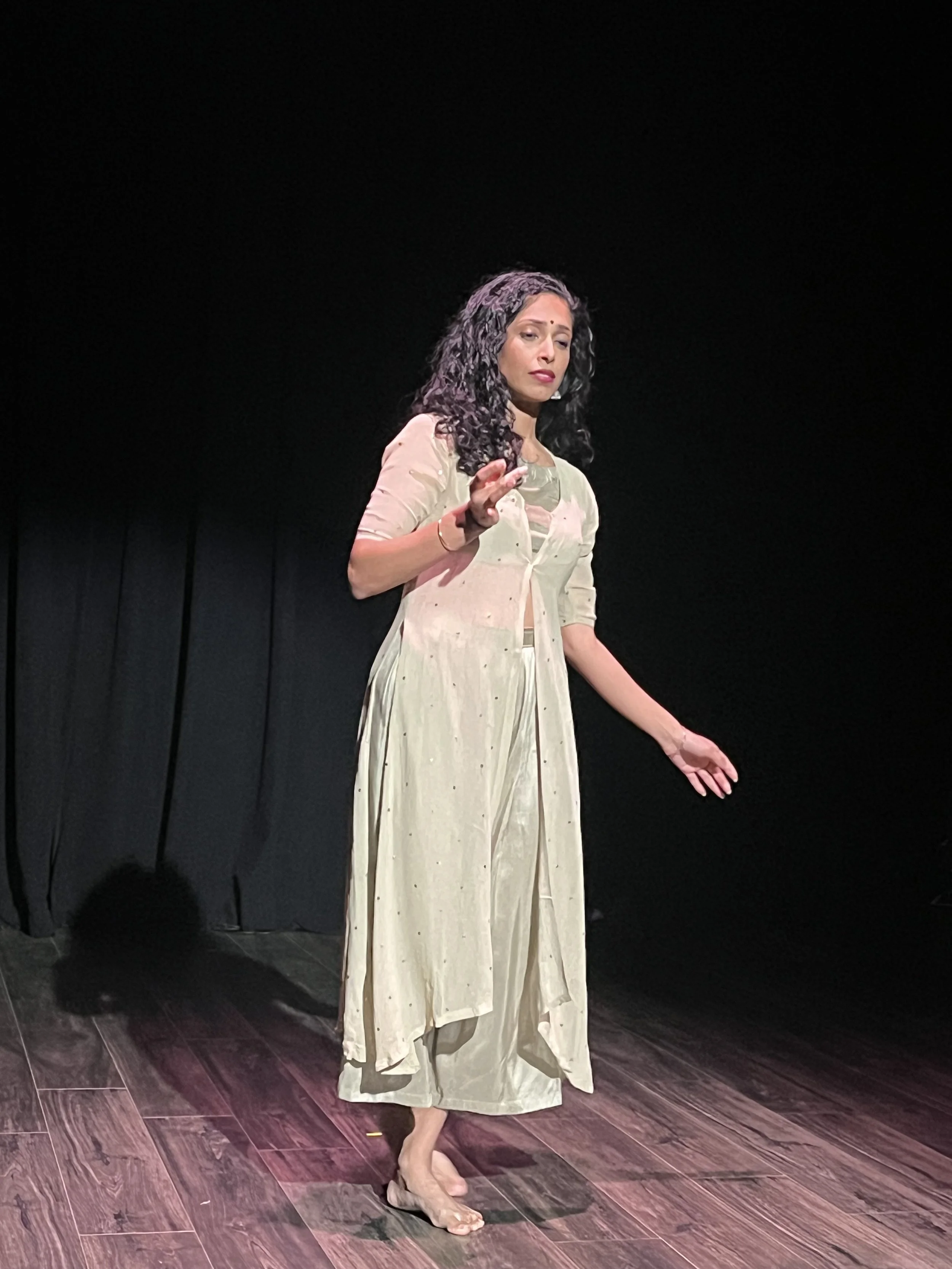
The costumes were simple instead of traditional Bharathanatyam attire. No temple jewelry, heavy fabrics, or bold makeup. At first it felt unusual, but later I realized it helped the audience focus on movement, expression, and the message of the piece.
The show focused on women’s struggles, and knowing some scenes were based on real experiences made it even more emotional. The opening piece showed a mother juggling everything without rest. After the performance, I talked about it with my mom, who also watched it. She told me stories from when I was a baby and how tiring those early years were. That conversation made me feel how personal and real the themes were.
One scene showing a girl being attacked caught me completely off guard. The sudden intensity, shouting, and emotional breakdown made it impossible to ignore. I don’t think I’ve ever seen Bharathanatyam face a topic that painful so directly. It stayed in my mind long after the show.
The thillana at the end was my favorite part. After so many emotional scenes, finishing with something upbeat and lively felt perfect. It blended western and Bharatanatyam movement again, but this time with joy and lightness.
Watching “As You Are” changed the way I see Bharatanatyam. I used to think fusion might weaken tradition, but this performance showed me that it can expand it beautifully when done with intention. Seeing the rehearsals, the live singing, the emotional abhinaya, and the level of teamwork inspired me. It made me want to stay open to new ideas and even learn fusion styles myself.