
ArtStream Concert: ‘Raghava Lahari’
A report on ‘Raghava Lahari’, by Silambam Kathak student Susan Thomas
I recently had the pleasure of attending Raghava Lahari, an Indian classical performance centered on Kathak dance and live music. The program explored themes from the story of Lord Rama and Sita, highlighting devotion, virtue, and perseverance through expressive dance, music, and narrative storytelling. Inspired by devotional traditions connected to the hymn Raghupati Raghava Rajaram, the presentation combined movement, rhythm, and storytelling to bring elements of the Ramayana to life.
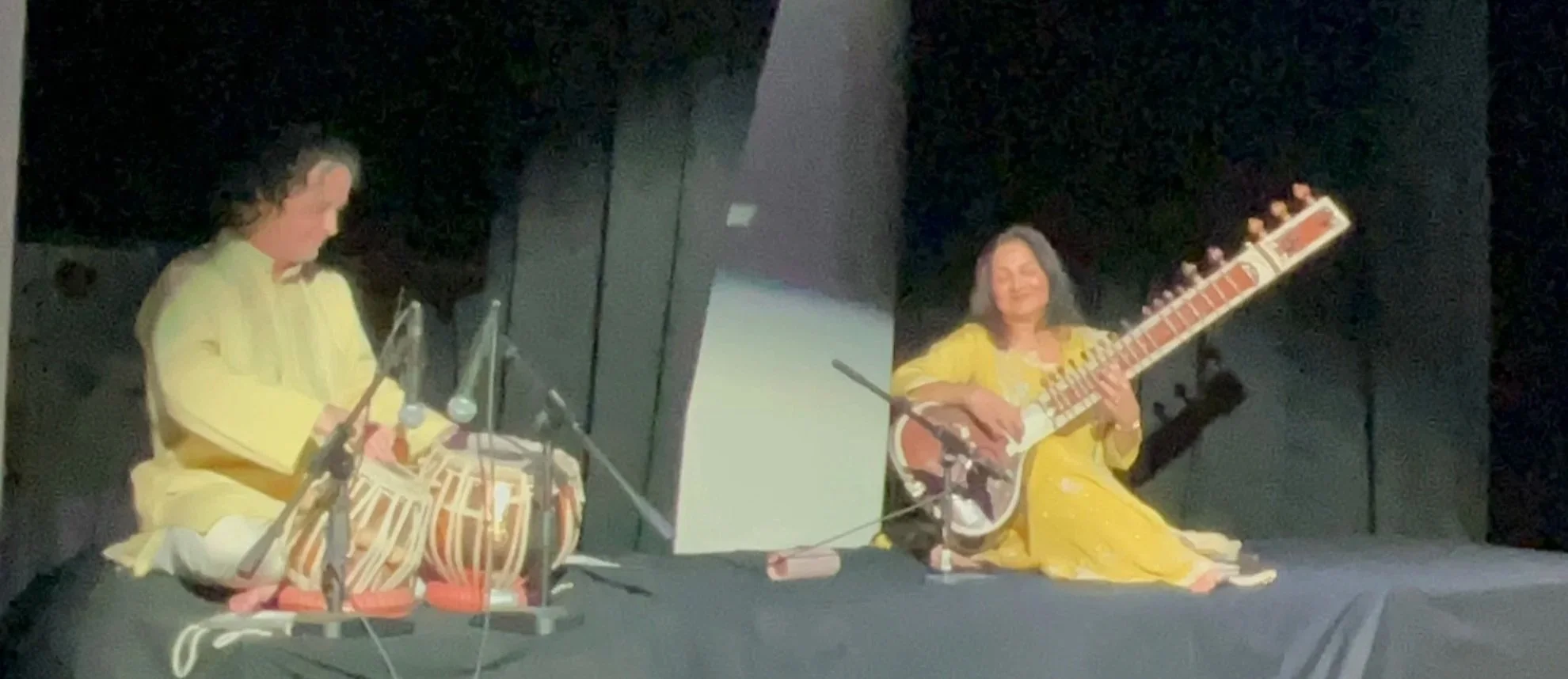
The featured artist was Pooja Ganesh, a former Silambam Houston YUVA artist, who performed alongside an ensemble including sitar and tabla musicians. In addition to being a highly skilled Kathak dancer, Pooja is also a classically trained vocalist. One of the most impressive aspects of the program was how she combined singing and dancing during the performance. This requires a significant amount of stamina because she had to sing and dance at the same time, which adds another layer of depth to the performance and demonstrates a high level of artistic control and musical understanding.
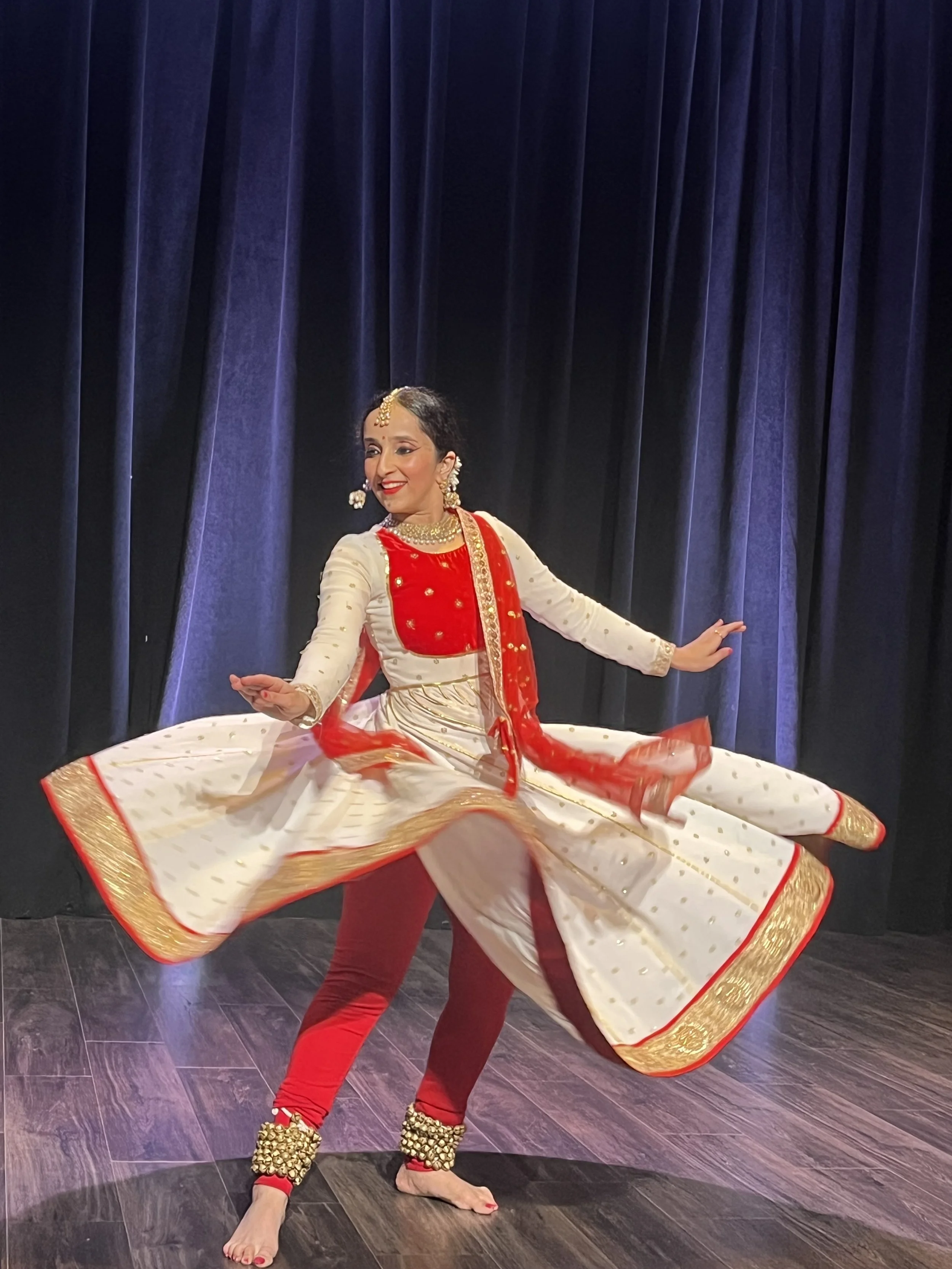
The program was structured in four acts. Throughout the performance, Pooja portrayed different characters from the Ramayana, including Hanuman and other figures within the story. Through expressive abhinaya and carefully choreographed movement, the narrativeunfolded clearly for the audience. The musical ensemble played an important role in supporting the storytelling. The rhythms of the tabla and the melodic lines of the sitar aligned closely with the dancer’s movements, helping emphasize particular moments such as the action of shooting arrows or the suggestion of traveling through a river. This coordination between dancer and musicians made the story feel vivid and engaging.
My favorite part of the performance was the final section. The costume worn during this portion beautifully complemented the nature of Kathak movement. I especially enjoyed watching Pooja perform multiple chakkars, where the flowing costume enhanced the visual effect of the turns and added to the elegance of the dance.
As someone currently in my second year of studying Kathak, the performance also gave me an opportunity to observe movements and gestures that I am beginning to learn in my own training. Because the music slowed during this portion, it was easier to observe the clarity and intention behind the hand gestures and how they contributed to the expression of the dance.
The program also included a question-and-answer portion with the performers. During this discussion, the sitar player shared a challenge she experienced when her instrument was damaged while traveling to Houston. Fortunately, another musician in the community was able to lend her a sitar so that the performance could continue as planned. It was interesting to hear about this experience and to see the sense of support within the artistic community.
Another part of the evening that I found meaningful was the way the artists were introduced along with their Gurus. I find it extremely moving when artists acknowledge their Gurus because it pays homage to a long-standing tradition of knowledge being passed from teacher to student across generations. In classical dance forms such as Kathak, this lineage is very important. Each generation of dancers learns from their instructors and may sometimes develop their own interpretations of pieces they have learned or continue teaching choreography that was passed down to them. Even when Gurus have passed away or are no longer able to teach, their influence and legacy continue through the dancers they trained. Seeing that recognition during the introductions was a powerful reminder of how this tradition continues to live on through new artists.
The evening concluded with a community spotlight featuring the Community Music Center of Houston. I appreciated learning about organizations within Houston that are working to support music education and the performing arts.
Overall, this was a wonderful program. As a beginning Kathak dancer myself, I found it particularly meaningful to watch a performance rooted in the same dance form that I am studying. The event deepened my appreciation for Kathak as a storytelling tradition and encouraged me to continue developing my own understanding of the art form.