
ArtStream Concert: Godha’s Garland
Silambam Kathak student Susan Thomas reflects on Godha’s Garland, a Bharatanatyam work by Dallas-based artist Deepta Seshadri, and how the work resonated with her
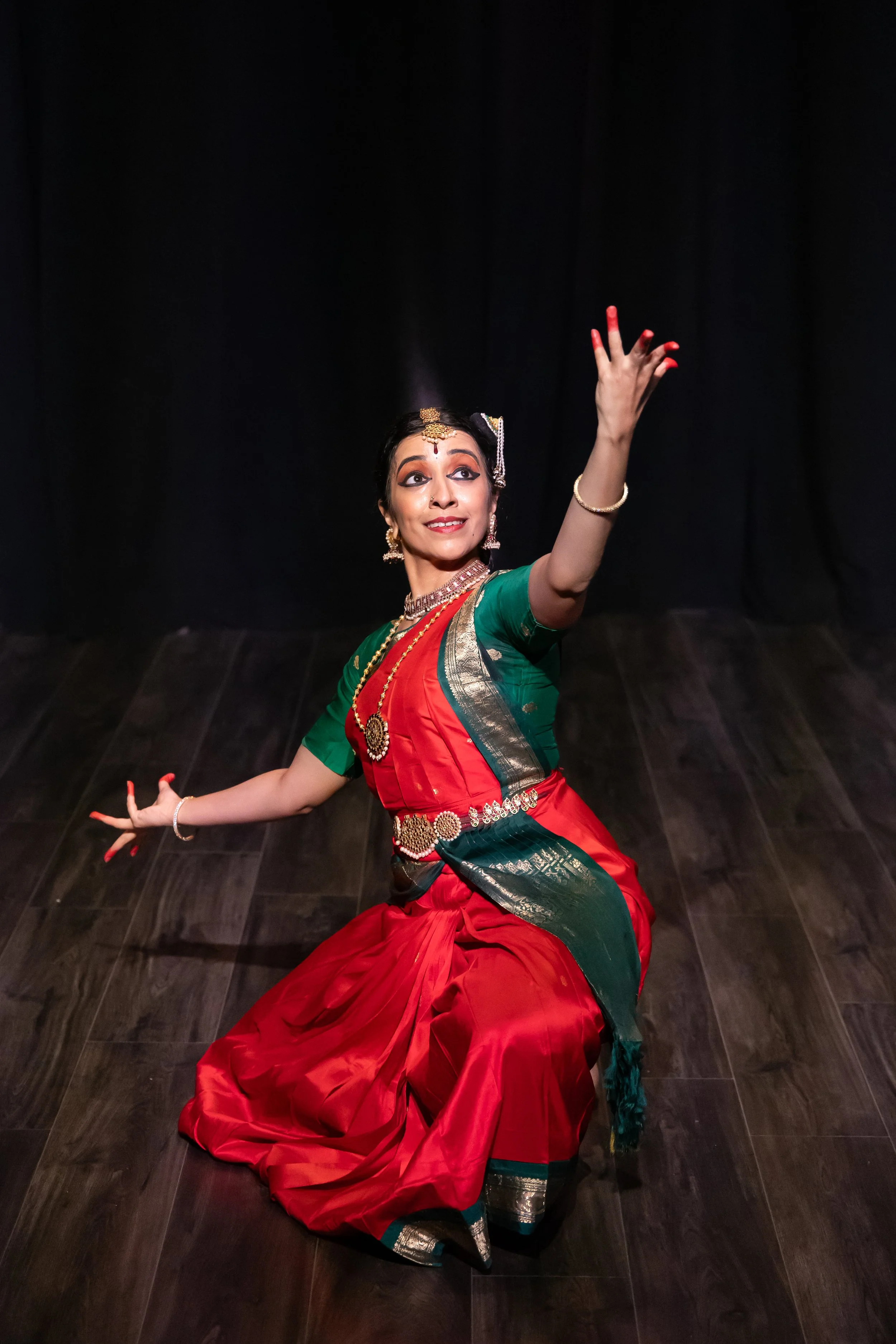
I was especially interested in seeing this performance because the featured Bharatanatyam artist, Deepta Seshadri, was previously a Silambam Houston YUVA artist. I truly appreciate how young and emerging artists are poured into, to continue featuring their growth as an artist. Deepta was introduced prior to performing and was highlighted for her ability to bring together nritta (pure dance) and abhinaya (expressive storytelling). The seed for Godha’s Garland was planted during her time as a YUVA artist, and I was curious to see how she would bring poetry to life through dance in an original production of her own.
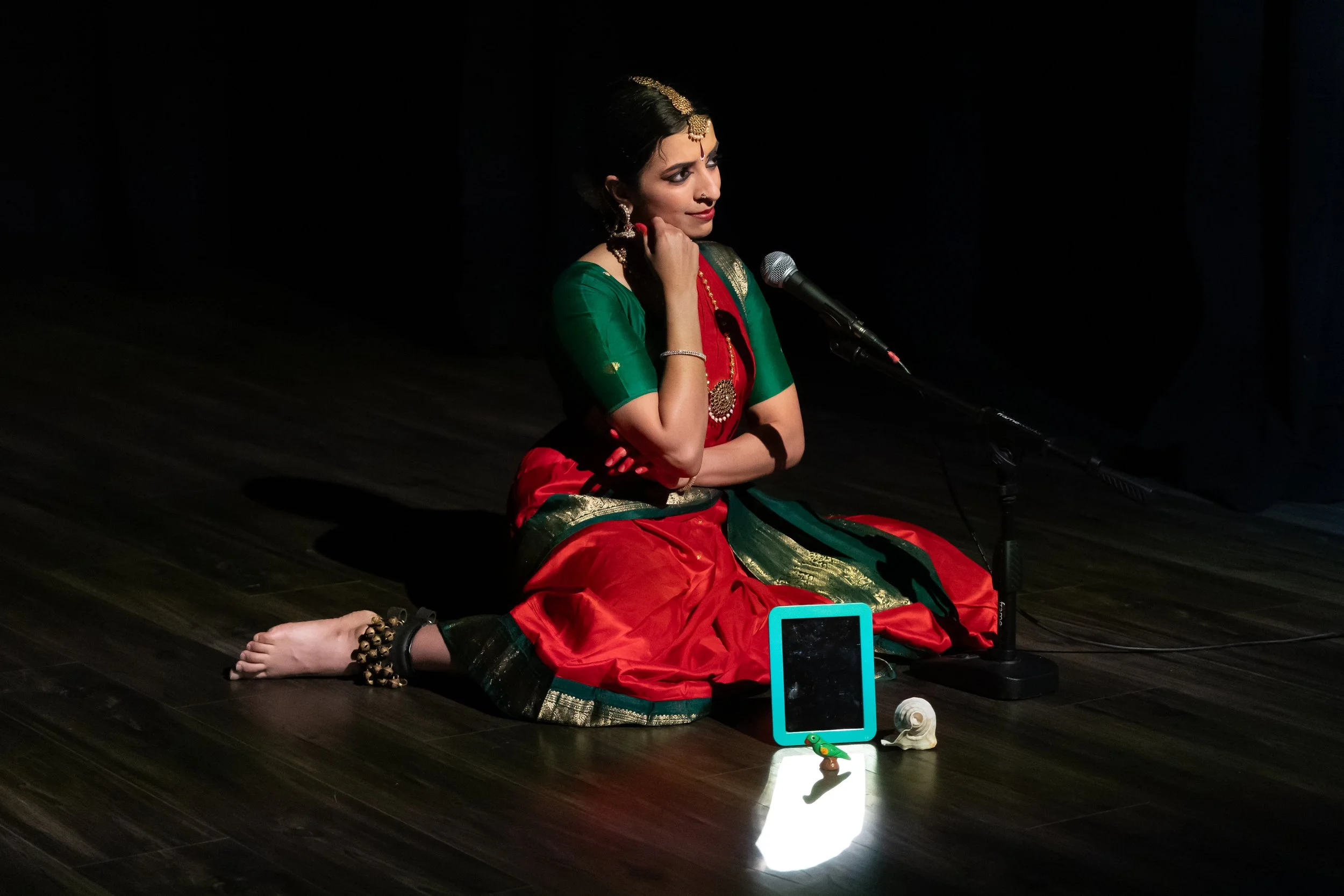
I also enjoyed learning about choreographer Deepta Seshadri’s personal connection to Andal’s poetry. Growing up, she often heard these poems at home, which eventually inspired her to explore who Andal was beyond her devotion to the divine and to better understand the meaning behind her poetry. I found it meaningful that something so familiar from her childhood became the starting point for her own creative exploration. Seeing how she transformed those early experiences into an original work through storytelling and dance made me appreciate the thought and personal connection behind the choreography.
The first act introduces Andal as a young woman imagining herself as a bride. As she looks into a mirror, she sees Lord Vishnu and begins to question her identity and place in the world. Even without understanding every word of the poetry, I could follow the storytelling through the dancer’s expressive eyes, gestures, and movements. At times, she embodied a parrot that helped narrate the story, demonstrating how effectively classical dance can communicate meaning and emotion beyond language.
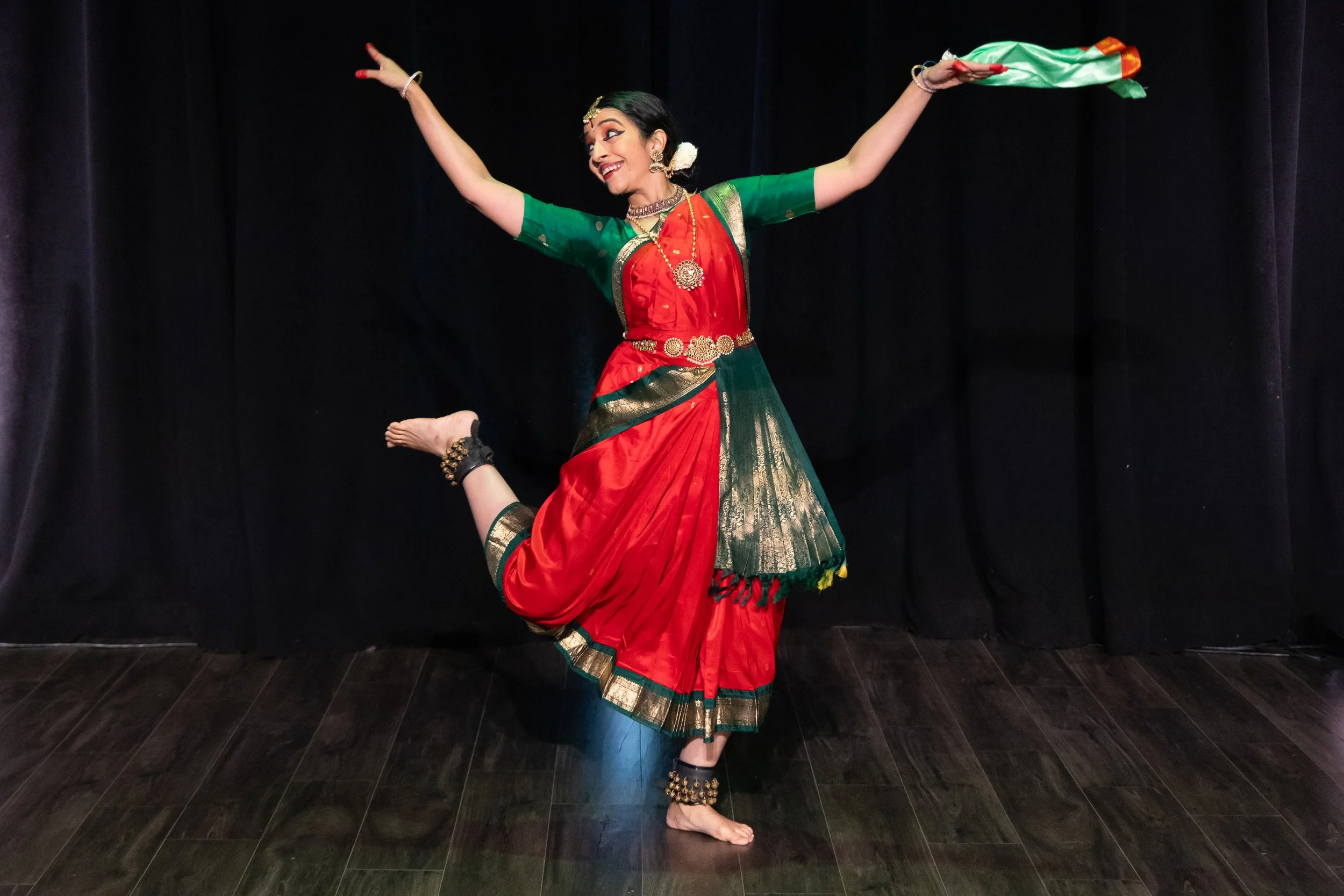
Another memorable element was the use of symbolism throughout the performance. Godha was shown hanging garlands on images of gods and goddesses, offering prayers, and even shooting arrows of love toward Krishna. Conversations with a conch shell and movements that evoked waves added further depth to the storytelling. As the performance progressed, cuckoos and rain clouds reflected Godha’s longing and emotional state. I appreciated how these visual elements helped convey the meaning and emotion of the poetry, while the music complemented the choreography and created an immersive experience.
One of the most significant moments in the story was Godha’s decision to wear the garland intended for the deity before it was offered to him. This act made her devotion personal and tangible, marking a turning point in her story. Rather than following the conventional path of marriage to a man, Andal envisioned a union with the divine. Her willingness to pursue this relationship challenged the expectations placed on women and reflected her independence and conviction.
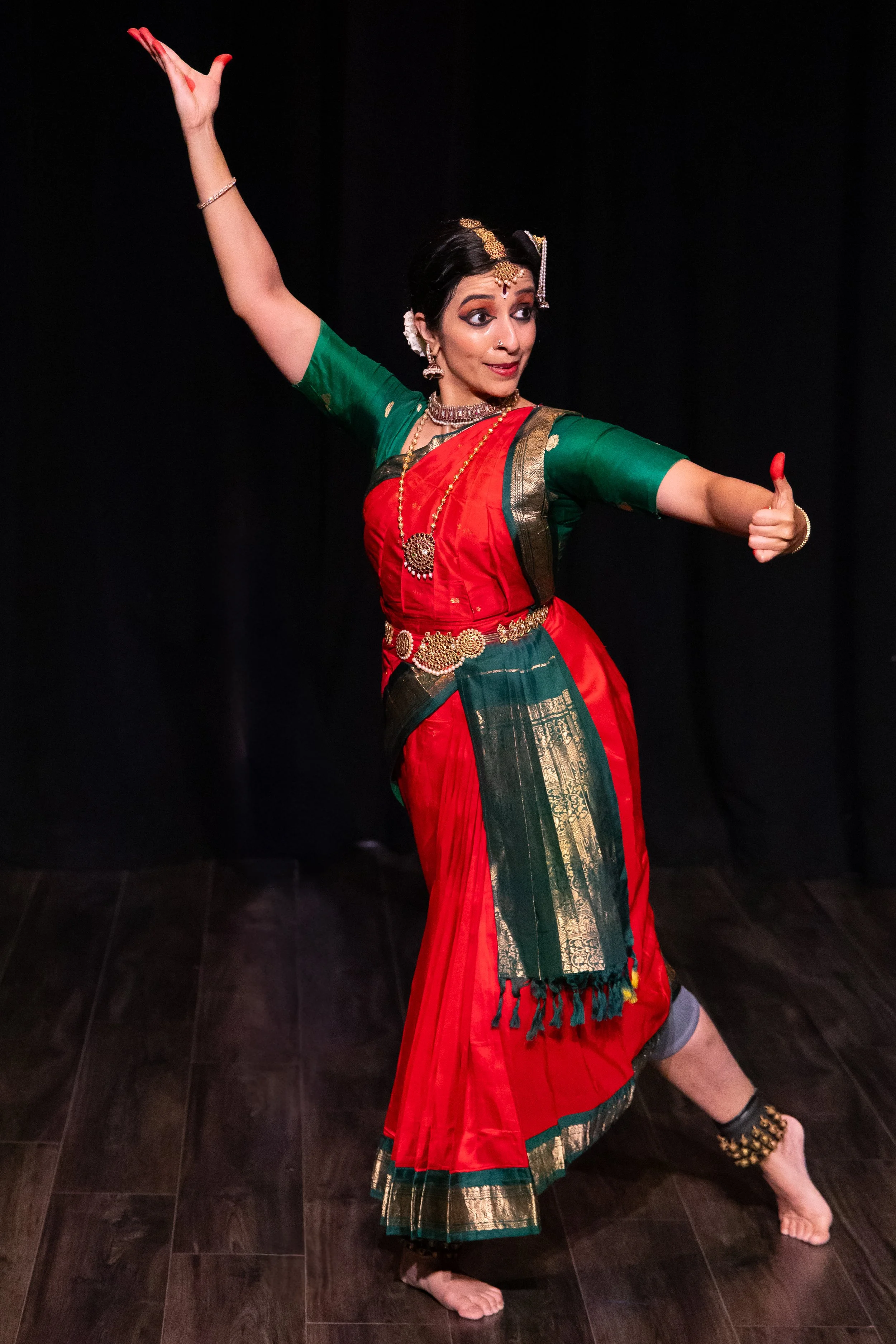
As narrated throughout the program, Krishna did not come to Andal despite her prayers and longing. “Why did she continue to love him,” the narrator questioned. Through conversations with the parrot and her friends, expressed through poetry and movement, the performance explored this question. Andal’s devotion was not portrayed as passive or unquestioning. Instead, it was filled with yearning, vulnerability, and determination. Her story moved between the human and divine worlds, ultimately revealing a woman who chose her own path and defined love on her own terms.
Overall, I appreciated how the performance combined Bharatanatyam, poetry, and music to explore Godha as more than a revered spiritual figure. Learning about Deepta’s childhood connection to the poetry made the production even more meaningful to me. I love how an experience from her early life continued to influence her artistic journey and eventually inspired an original work of such depth. The performance also demonstrated the power of abhinaya to communicate complex emotions, even when the audience may not understand the language. Most importantly, Andal’s story encouraged me to reflect on a woman who had the courage to question expectations, follow her convictions, and create her own path. Her story carries a message that remains relevant today, particularly for young women.